


Agent architectures in practice: patterns, platforms, and use cases
December 24, 2025
4 min
Whether you’re building chatbots, automating workflows, or developing AI-driven apps, the right AI model can make a huge difference in performance, security, and cost.
This post is a practical guide. It keeps the language simple, but it doesn’t dodge the real trade-offs.
If you want one “north star”: pick the model that makes your system reliable and affordable, not the model that wins a single benchmark.
If you’re new to evaluation, start here: OpenAI evals getting started.
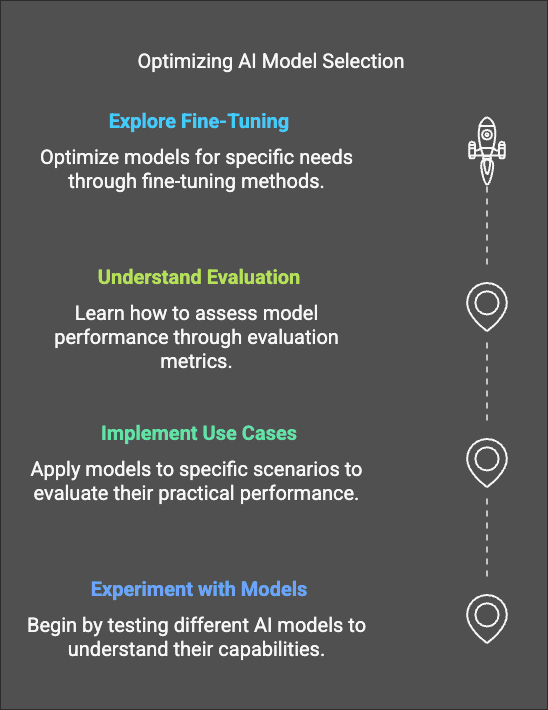
Most teams should choose models by answering these questions in order:
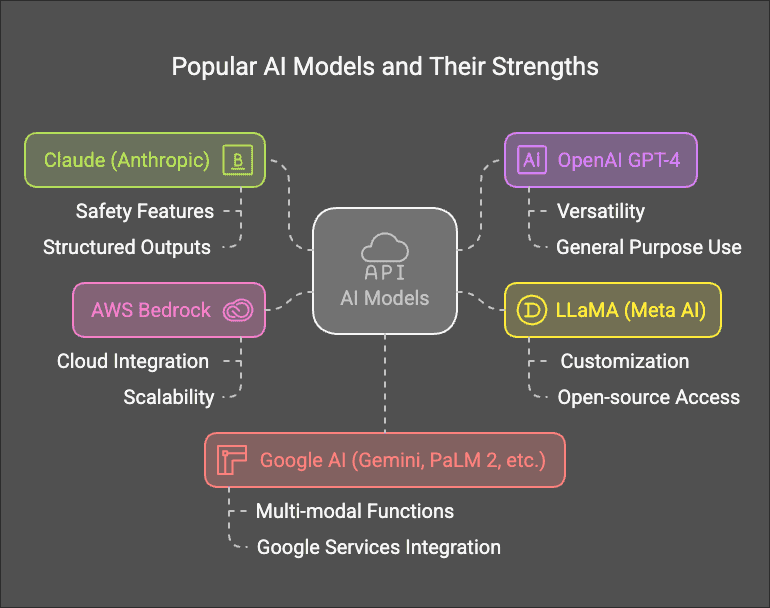
This table is intentionally “high level”. Providers change names and pricing often, but the decision logic stays stable.
| Family | Best for | Strengths | Trade-offs | Typical deployment |
|---|---|---|---|---|
| OpenAI (GPT family) | General assistant, coding, tool calling, multimodal | Strong all-around; mature tooling | Closed; governance depends on vendor settings | Hosted API (OpenAI / Azure OpenAI) |
| Anthropic (Claude family) | Long docs, analysis, safer assistants | Strong writing + reasoning; enterprise-friendly patterns | Closed; deployment choices depend on org constraints | Hosted API / cloud marketplaces |
| Google (Gemini family) | Multimodal + Google ecosystem | Strong multimodal; tight Google integrations | Closed; ecosystem choice matters | Hosted API (Google) |
| Meta Llama (open weights) | Private deployments, customization | Run in your infra; huge community; many fine-tunes | You own ops, safety, updates | Self-host (GPU/CPU), managed hosts |
| Mistral (open + hosted) | Cost-sensitive apps, flexible deployments | Strong performance per cost; flexible options | You own some integration choices | Hosted API or self/managed hosting |
If you want a directory of many models: MetaSchool’s AI Models Directory.
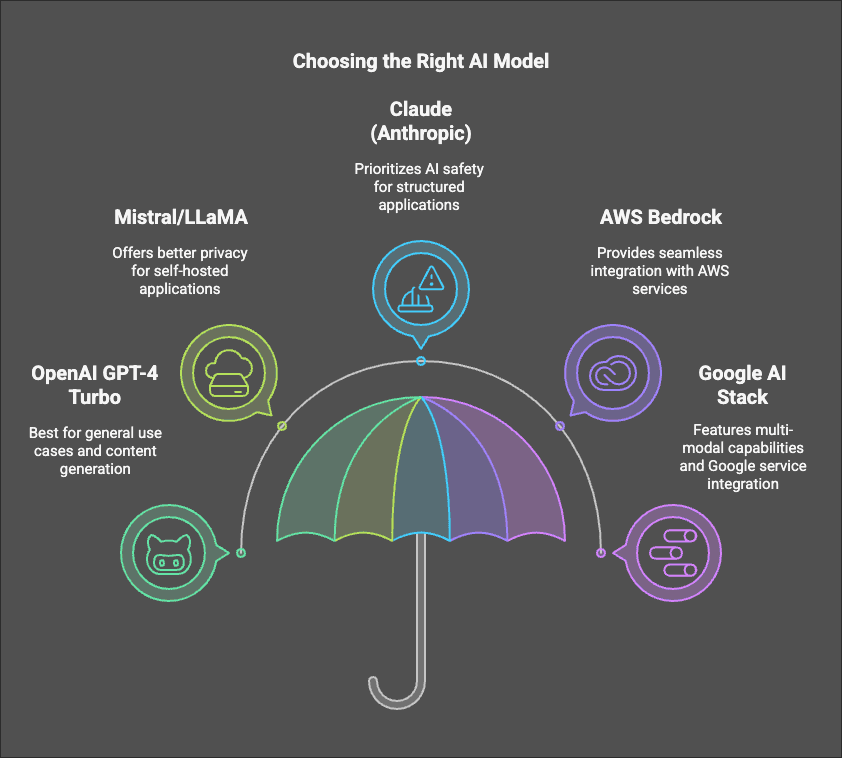
Here’s the simple breakdown:
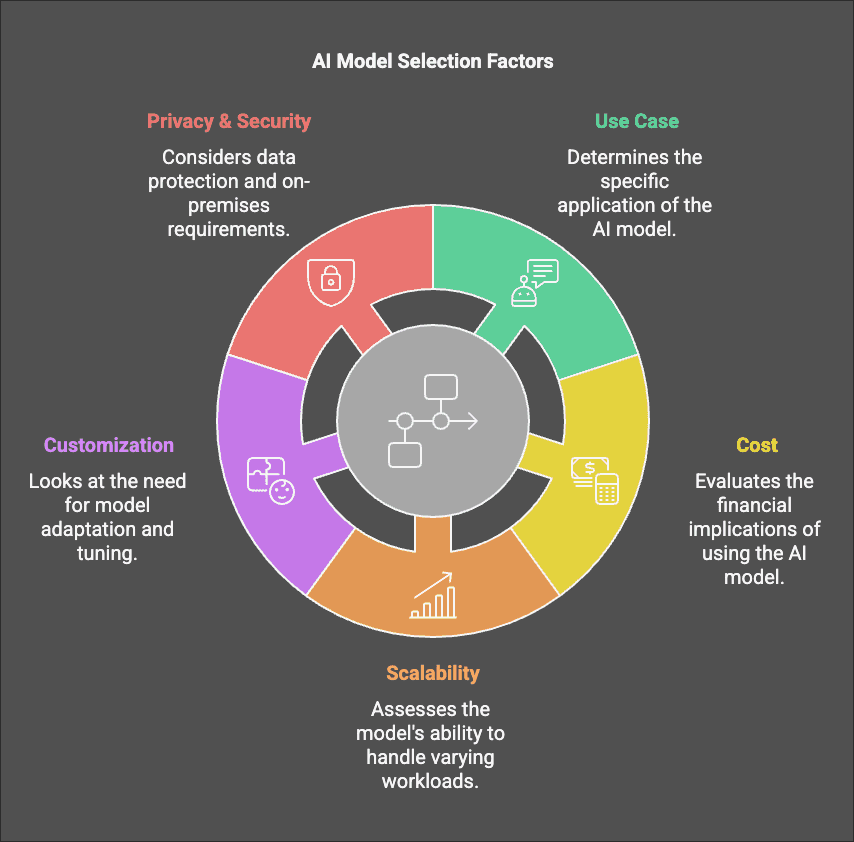
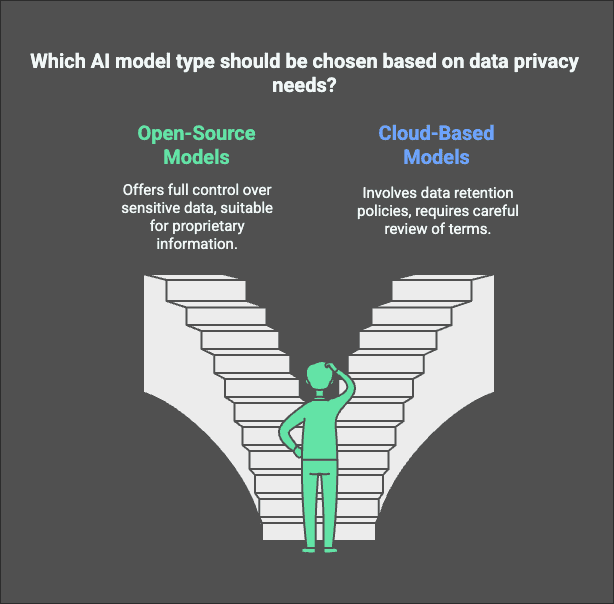
When choosing an AI model, data privacy should be a key factor. If you’re working with sensitive or proprietary data, you might prefer an open-source, self-hosted model like LLaMA or Mistral to ensure full control over data.
Cloud-based models like OpenAI’s GPT-4 or AWS Bedrock handle data differently, often with retention policies or logging mechanisms, so be sure to review their documentation and terms before implementation.
A foundation model is trained on huge datasets to learn general language/vision patterns. It’s not trained for your specific company task yet—it’s a general engine.
Most LLMs start with self-supervised learning:
Knowledge distillation is “teacher → student” training:
Why teams like distilled models:
A canonical example is DistilBERT (a distilled version of BERT): https://huggingface.co/docs/transformers/model_doc/distilbert
There are two common paths:
In practice, many teams combine:
LLMs are still ML. They just operate at a huge scale and use a particular architecture.
Think of it like this:
LLMs show up in ML systems the same way other models do:
If you want a mental model without a math wall:
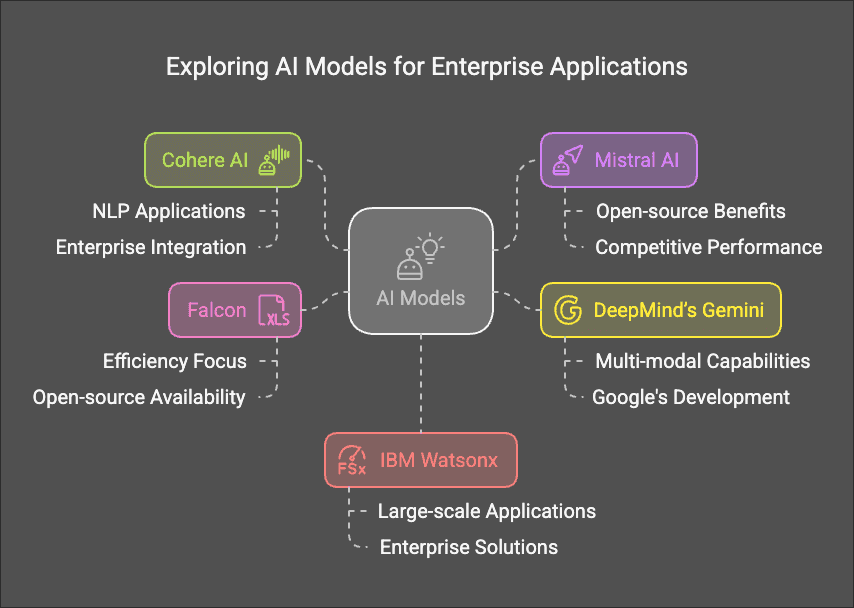
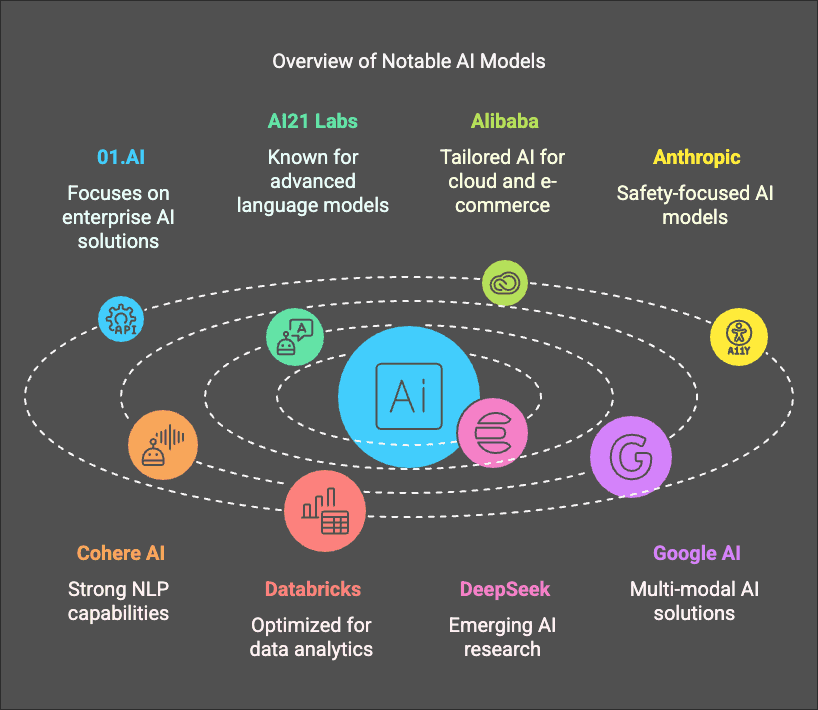
This is not a complete list, as the AI landscape is constantly evolving. Here are some additional AI models worth considering:
I’m linking instead of embedding to avoid YouTube embed errors.
Choosing the right model is an iterative process. Start simple, measure, then add sophistication: routing, caching, distillation, and fine-tuning only when you can prove the value.

Legal Stuff